
Matched to your industry

A team built for your sector — and for your site

Every sector has its own pace, its own working environment and its own demands on people. We shape the team, the shift plan and the way it is managed around your sector — and around the specific site where the work happens.

Your challenge

What stands in your way today, and what moves over to us from the moment we step in.

The person who is right for a hotel lobby is not automatically the person who will hold a night shift in a distribution centre — and usually that only becomes clear after they have started.

The difference is paid for in turnover: someone leaves after a few weeks, the training starts over, and your managers are back on staffing instead of on the work itself.

What OASIS takes responsibility for

  • Building the shift plan around how the sector actually runs — nights, weekends, peak seasons and quiet days.
  • Matching people to the physical environment: a chilled warehouse, a whole shift on your feet, lifting, or facing customers all day.
  • Recruiting for the right pace — some sites need quiet accuracy, others need speed and holding up under pressure.
  • Checking which languages are spoken on the floor, and staffing so an instruction can be given and answered without a go-between.
  • Establishing up front which permits and certifications the role requires, and making sure they are valid before day one.
  • Training to the site’s own procedures — safety, security, service rules, and what is and is not allowed on the floor.
  • Fitting our management to the way your sector manages people — who hands out the tasks, who approves the hours, and who is called when something goes wrong.

How does it work?

Step 1 of 5

Come and watch a shift

We come to the site while the work is running — not to a meeting room. We see the pace, the noise, the distances and the hour when it gets busy.

Step 2 of 5

Learn the role in the sector’s own words

We sit with whoever actually manages the people: what happens in an hour, what brings a shift down, and what separates someone who stays from someone who leaves.

Step 3 of 5

Write the matching profile

We turn what we saw into a working list: requirements, certifications, screening questions and languages — and we agree it with you before any recruiting starts.

Step 4 of 5

Recruit and train to that profile

We screen against the profile rather than a generic vacancy, and train for the role and the site — so day one is not a day of learning at your expense.

Step 5 of 5

Check against reality and correct

After the first weeks we look at who stayed, who did not, and why — and we update the profile. Fitting a sector is not a one-off decision.

Projects we have delivered

Israel's national census

Over 200 field workers on this one project — counting households across the central district, for the Central Bureau of Statistics.

  • Over 200Field workers
  • The central districtCoverage

National mapping project

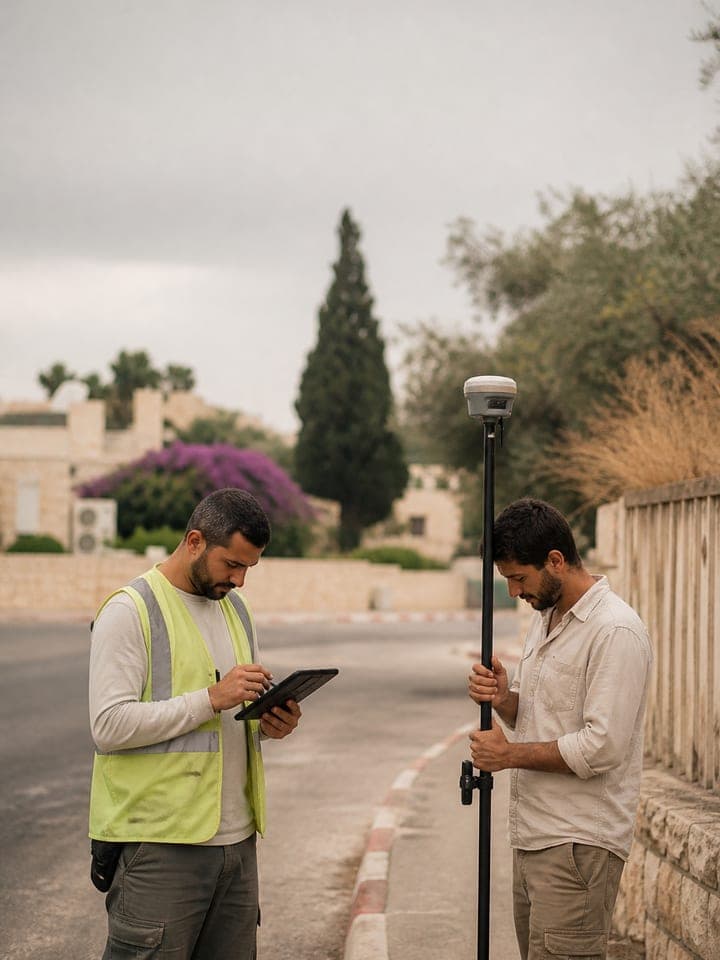
Over 100 workers we recruited and managed on this project — mapping street by street in ten cities at once, for an international client.

  • Over 100Workers
  • Ten citiesCoverage

COVID-19 testing sites

More than 100 field workers we put in place for this one project — at testing sites nationwide, at very short notice, as part of the support effort for the Ministry of Health.

  • More than 100Field workers
  • NationwideCoverage

The workers we recruit for you

  • Hospitality and hotel crews
  • Shop floor and sales teams
  • Warehouse, picking and distribution teams
  • Service and call-centre staff
  • Events and catering crews
  • Field and mapping teams
  • Crews for special projects

How we manage and report

  • One OASIS contact who knows your site, its shifts and its people by name.
  • Metrics set by the sector — at one site we count shift attendance, at another the response time to a customer.
  • Ongoing reporting on staffing, attendance and drop-off — so a mismatch shows up early rather than at the end of the quarter.
  • A regular update meeting, and a revision of the matching profile whenever something in the sector or on the site changes.

Frequently asked questions

Do you work in our sector?

We mainly staff hospitality and hotels, retail, logistics and distribution, customer service and call centres, events and catering, field work and special projects. If your sector is not on that list, we will tell you in the first conversation whether we have something to offer — and if we do not, we will say that too.

What do you need from us in order to fit the team to our sector?

An hour on site during a real shift, and a conversation with whoever actually manages the people. From that we write the matching profile, and we agree it with you before recruiting starts.

What happens if a worker turns out not to fit the role?

You let us know, and we take care of filling the role again. We also go back to the matching profile and look at what we missed in it, so that it does not happen again. Replacement terms are set in the customer agreement and vary by role type.

Who is responsible for the permits and certifications a role requires?

First we establish what the role and the regulation that applies to it actually require, and we make sure it is valid before day one. What is our responsibility and what is yours is set in the customer agreement.

Let’s start with a short call

Twenty minutes is enough to understand what you need: how many workers, when you need them, and how we would work together.

How many workers do you need?
When would you like to start?