
How we work

Understand first. Recruit second.

We do not take a job description and send over CVs. First we get to know the organization, the role and the manager — and only then do we start looking.

Your challenge

What stands in your way today, and what moves over to us from the moment we step in.

In most places hiring starts with a job description and ends with a pile of CVs — without anyone seeing the place or speaking to the direct manager.

That is how you get candidates who look excellent on paper and do not last two months.

What OASIS takes responsibility for

  • A first visit at your place, before the search starts
  • The role defined together with the direct manager, not only with HR
  • A search rebuilt from scratch for every organization and every manager
  • Candidates presented with an explanation of why these people fit you
  • Support after the hire — with the manager and with the employee, months later too

How does it work?

Step 1 of 9

Getting to know you

Before we look for anyone, we come to you. Who you are, what you do, where you are heading, and what matters to you in the people you hire.

Step 2 of 9

How the place really works

Not how the procedure is written — how it actually happens. Who decides, who approves, what gets settled in a message and what waits for a meeting, and what the place looks like on a busy day when someone is missing.

Step 3 of 9

Taking the job apart

We walk through what this person will actually do on an ordinary day, what they own alone and where they lean on other people. Including the parts that never make it into the job ad.

Step 4 of 9

The working environment

We look at the place itself: the shifts, the pace, the noise, the team around the role and the trip to get there. Someone who fits the job but not the place leaves within a month.

Step 5 of 9

The manager’s style

Every manager has their own way. Some hand over a task and trust it is done; some want an update at the end of every day. Some want a person who raises a hand and asks; for others that is exactly what wears them down. We ask about it directly.

Step 6 of 9

What works and what doesn’t

We ask who has done well in this role with you and who has not, and why. Usually the people who left turn out to share one thing — and that is exactly what we need to screen out next time.

Step 7 of 9

A search built for one manager

The same role in two organizations is two different searches. We build the search around the manager who will receive the person: what they are looking for, what will work with them and what will not.

Step 8 of 9

Staying after day one

We do not disappear on day one. We check with the manager and with the employee how it is going, and deal with friction while it is still small.

Step 9 of 9

Making it last

We measure ourselves by the person who is still with you a year later, not by the one who started. We keep checking, and we fix things the moment something starts to slip.

Projects we have delivered

Israel's national census

Over 200 field workers on this one project — counting households across the central district, for the Central Bureau of Statistics.

  • Over 200Field workers
  • The central districtCoverage

National mapping project

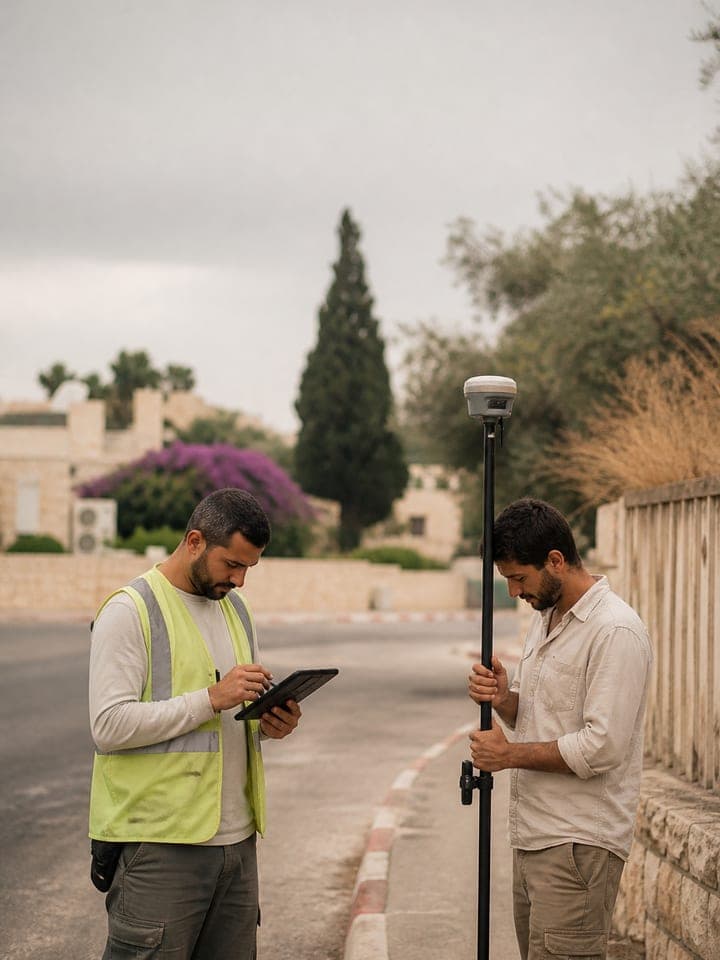
Over 100 workers we recruited and managed on this project — mapping street by street in ten cities at once, for an international client.

  • Over 100Workers
  • Ten citiesCoverage

COVID-19 testing sites

More than 100 field workers we put in place for this one project — at testing sites nationwide, at very short notice, as part of the support effort for the Ministry of Health.

  • More than 100Field workers
  • NationwideCoverage

Frequently asked questions

Why does this take longer than sending over CVs?

Because we are not sending CVs. Getting to know the organization is a few days of work, and after it the search itself is shorter and more accurate — overall it is usually faster than hiring twice for the same role.

How much of our time does the getting-to-know stage take?

Usually one meeting with the direct manager and a short walk around the place. If there is someone else worth hearing — a team leader, or the person doing the job today — we will ask for another half hour. We will not take days off your calendar.

Let’s start with a short call

Twenty minutes is enough to understand what you need: how many workers, when you need them, and how we would work together.

How many workers do you need?
When would you like to start?